- December 8, 2025
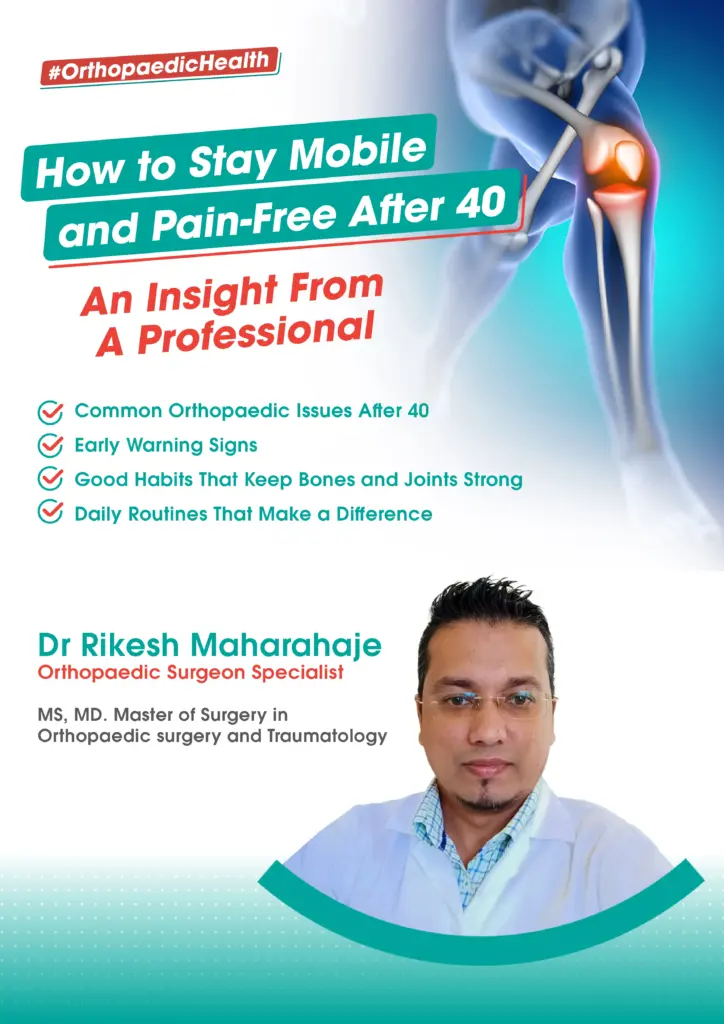
Insights from Dr. Rikesh Maharahaje, Orthopaedic Surgeon Specialist
As we age, our bodies start sending signals — sometimes subtle, sometimes loud — that our joints, bones, and muscles aren’t quite the same. For adults over 40, these changes can affect everyday life, from climbing stairs to carrying groceries. Orthopaedic Surgeon Specialist Dr. Rikesh Maharahaje shares practical advice to maintain strength, flexibility, and comfort well into later adulthood.
Common Orthopaedic Issues After 40
In his practice, Dr. Maharahaje often sees wear and tear, reduced bone density, and old injuries resurfacing. The most frequent issues include:
-
Osteoarthritis – knees, hips, and hands commonly affected
-
Chronic lower back pain – often linked to disc degeneration
-
Shoulder problems – especially rotator cuff injuries
-
Tendon issues – discomfort in wrists or elbows
-
Osteoporosis – increased fracture risk, especially after menopause
-
Foot & hand conditions – plantar fasciitis, carpal tunnel syndrome
Takeaway: These problems usually begin quietly. Early lifestyle changes help protect long-term mobility.
Why Joints Start to Complain
As we age, cartilage thins, joint fluid decreases, muscles weaken, and ligaments lose elasticity.
“These natural changes explain why stiffness and soreness become more common after 40,” says Dr. Maharahaje.
Lifestyle factors such as inactivity, excess weight, smoking, poor posture, and repetitive strain can accelerate decline. Genetics also play a role.
Takeaway: Staying active, managing weight, and moving mindfully slows down joint stiffness and discomfort.
Habits That Keep Bones and Joints Strong
According to Dr. Maharahaje, consistency matters more than intensity. Key habits include:
-
Regular exercise – especially strength or weight-bearing routines
-
Low-impact activities – walking, cycling, swimming
-
Balanced nutrition – calcium, vitamin D, protein, anti-inflammatory foods
-
Avoid smoking & limit alcohol – protect bones and soft tissues
-
Maintain healthy weight – reduces stress on knees and hips
-
Stay hydrated – keeps cartilage cushioned
-
Flexibility routines – stretching, yoga, tai chi
-
Adequate sleep – supports tissue repair
“It’s not about drastic measures,” Dr. Maharahaje explains. “Small, steady habits build resilience over time.”
Takeaway: Simple routines, practiced consistently, keep your joints functioning well.
Spot Early Warning Signs
Dr. Maharahaje advises watching for subtle clues such as:
-
Persistent or recurring joint pain
-
Morning stiffness
-
Swelling, warmth, grinding, or clicking
-
Reduced flexibility
-
Difficulty climbing stairs
-
A feeling of joint instability
Good nutrition also supports recovery: calcium and vitamin D strengthen bones, protein repairs muscles, and vitamin C aids collagen production. Hydration and anti-inflammatory foods help ease discomfort.
👉 Takeaway: Don’t ignore early warning signs — timely action prevents bigger problems later.
Daily Routines That Make a Difference
Small changes can significantly improve joint comfort. Dr. Maharahaje often sees meaningful improvements from simple posture and movement adjustments:
-
Sit upright, shoulders relaxed, feet flat
-
Stand, stretch, or walk every 30–60 minutes
-
Lift objects safely — bend at the knees and keep items close
-
Wear supportive footwear if standing for long periods
-
Start the day with light stretching or a short walk
Takeaway: Everyday habits play a powerful role in long-term joint protection.
Final Word from Dr. Maharahaje
“Joint health after 40 is about listening to your body and acting early. With consistent habits, mindful movement, and proper nutrition, you can preserve mobility and independence for years. My advice is simple: don’t wait for pain to dictate your choices — invest in your joints before they demand attention.”
About Dr. Rikesh Maharahaje
Dr. Rikesh Maharahaje is an experienced Orthopaedic Surgeon based in Rose Hill, Mauritius. With over 12 years of practice, he provides comprehensive musculoskeletal care — including trauma and fracture management, arthroscopy, joint replacement, spinal surgery, and carpal tunnel treatment.
He is known for his patient-centred approach, clear communication, and evidence-based techniques, all aimed at restoring function and improving quality of life.